 EN510–12
Story preview
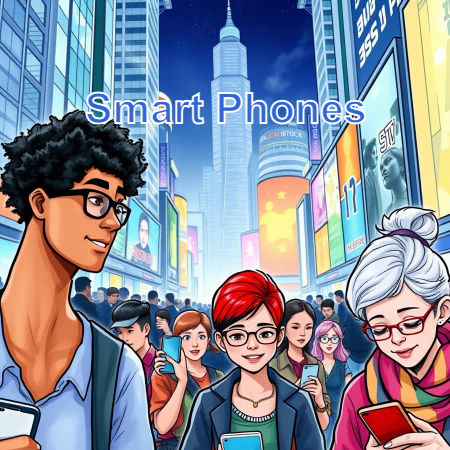
Smart Phones
Today, billions of people use smartphones, but they did not exist 30 years ago. A smartphone is a mobile phone that can connect to the internet and run apps, like a tiny computer in your hand.
The first big step was the mobile phone. In 1973, engineer Martin Cooper at Motorola made the first handheld mobile phone call. Those early phones were huge, heavy, and could only make calls.
In 1992, IBM created a device called the Simon Personal Communicator. It could make calls, send emails, and even had a touch screen. Many people consider it the first true smartphone, even though it was expensive and not very popular.
A key invention for smartphones was the touch screen. In the 1990s and early 2000s, companies like IBM, Palm, and Nokia made devices that combined phones with small computers and styluses. These were used mostly by business people.
In 2000, Sharp released a phone in Japan that could connect to the internet and run simple apps. Around the same time, BlackBerry phones became famous for their tiny keyboards and email services. These helped people see that phones could do much more than calling.
In 2007, Apple launched the iPhone, which changed everything. It had a large multi-touch screen with no physical keyboard, and people controlled it with their fingers. It also included a web browser, music player, and camera in one device.
In 2008, Google released Android, a smartphone system that many companies could use. This made smartphones available at many prices and spread them around the world. App stores, like Apple’s App Store and Google Play, let people download millions of apps.
Today’s smartphones have powerful cameras, GPS, and fast internet. They keep developing with better batteries, screens, and artificial intelligence features. The smartphone you use now is the result of many inventions and improvements over more than 50 years.