 EN1169–12
कहानी का पूर्वावलोकन
Khadijah and the Merchant
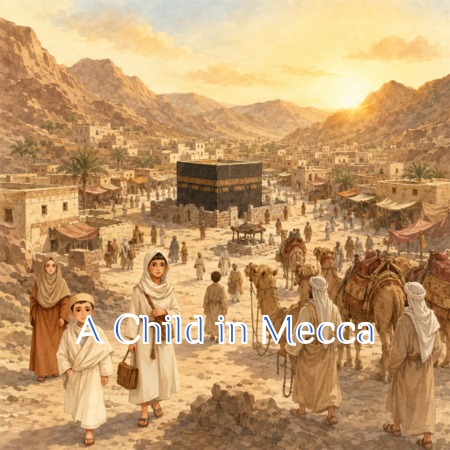
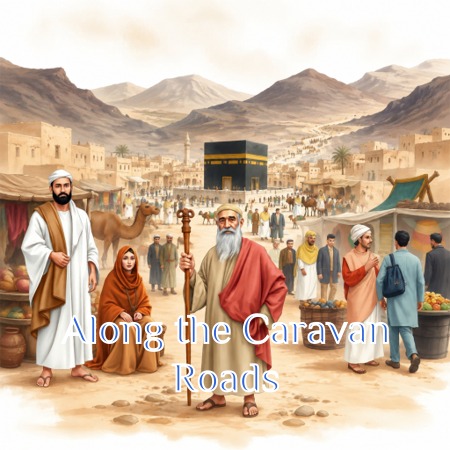
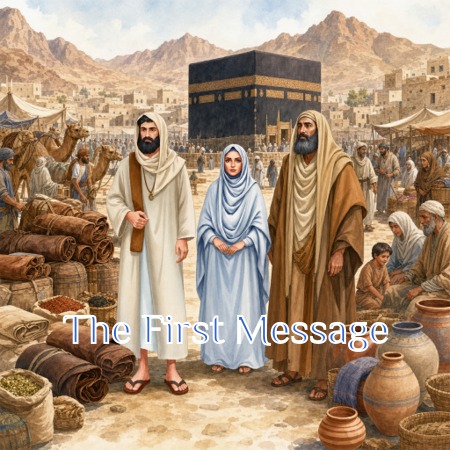
In the late sixth century, Mecca stood among dark, rocky hills in western Arabia, where desert paths met like threads in a woven cloth. Caravans arrived with leather, spices, cloth, and stories, while the Kaaba, a cubelike sanctuary, drew visitors from many tribes.
Meccan life was shaped by family clans, careful agreements, and reputation, because there were few written contracts compared with later cities. A merchant who cheated could lose customers quickly, but a merchant known for fairness might be trusted across valleys and distant markets.
Muhammad ibn Abdullah belonged to the Quraysh, the leading tribal group of Mecca, yet his early life included hardship. His father died before he was born, his mother died when he was young, and he was later cared for by relatives, including his uncle Abu Talib.
Abu Talib was not a wealthy man, but he held an important place in his clan and helped connect young Muhammad to the responsibilities of Meccan society. Through family networks, Muhammad learned about herding animals, helping households, and eventually traveling with caravans, where patience and honesty mattered every day.
Among the most respected business figures in Mecca was Khadijah bint Khuwaylid, a woman of intelligence, wealth, and influence. She had been married before, managed her own property, and arranged trade by hiring agents to carry goods north toward Syria and south toward Yemen.
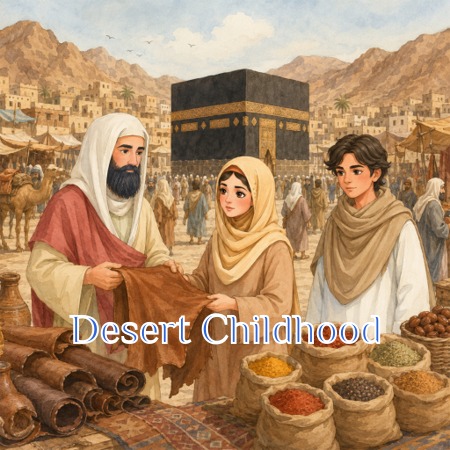
According to early Muslim historical traditions, Khadijah hired Muhammad to help conduct trade for her business, and Maysarah, one of her assistants, traveled with the caravan. Picture packed camel saddles, folded cloth, inked accounting tablets, and water skins swaying as the travelers moved across the wide, sunlit land.
Reports say that Khadijah was impressed by Muhammad’s honesty in trade, and that their marriage followed after discussion between families. Tradition often gives Muhammad’s age as about twenty-five and Khadijah’s as about forty, although historians note that exact ages are uncertain in ancient biographies.
Khadijah should be understood not only as someone’s wife, but as a capable leader in her own right. Her business skill, property, and judgment gave her a powerful voice, and her decision to trust Muhammad shows how personal character could become part of public life.