 EN79–12
कहानी का पूर्वावलोकन
Desert Childhood
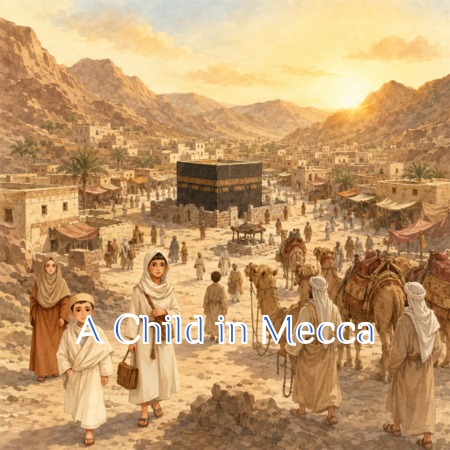
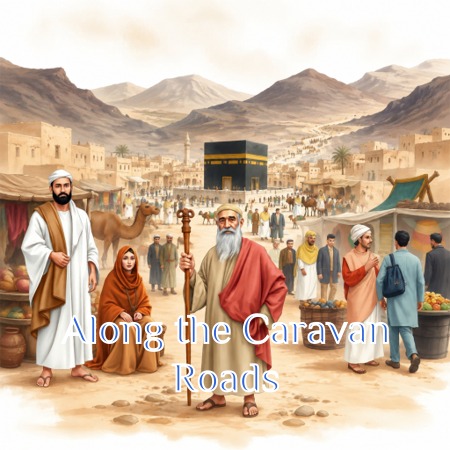
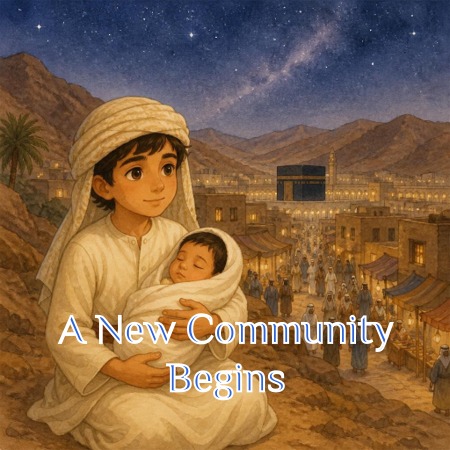
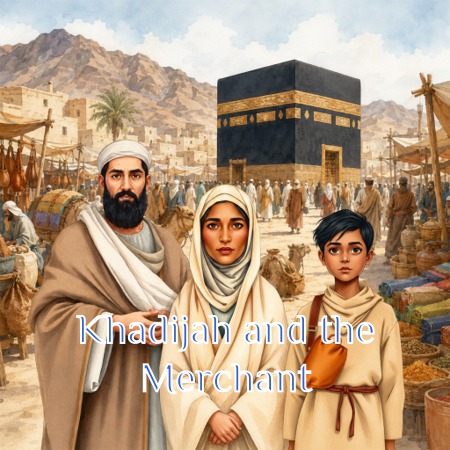
In the sixth century, the city of Mecca stood in a dry valley of western Arabia, surrounded by brown mountains and paths made by caravans. Traders came with leather, cloth, spices, and stories, while families of the Quraysh tribe lived near the Kaaba, a cubelike sanctuary honored by many Arabian communities before Islam.
Around the year 570 CE, according to traditional accounts, a child named Muhammad ibn Abdullah was born in Mecca. His father, Abdullah, had died before his birth, so the baby entered the world already missing one parent, a quiet sadness that many families in the ancient world knew too well.
Muhammad’s mother was Aminah bint Wahb, remembered in early Muslim biographies as a respected woman from a connected Meccan family. Because written records from seventh-century Arabia are limited, historians compare later reports carefully, noticing both the details they share and the questions they cannot fully answer.
In Mecca, some families sent infants to be nursed and raised for a time among desert-dwelling communities. This may sound surprising today, but it was a valued custom: people believed the open desert air was healthier, and children could learn clear, expressive Arabic from tribes famous for strong speech and poetry.
Traditional reports say Muhammad was cared for by Halimah al-Sa'diyah, a woman from the Banu Sa'd, a desert community. Illustrations of this part of the story can show goat-hair tents, grazing animals, a swinging cradle, and footprints in sand, while Muhammad himself is not shown, out of respect for Islamic artistic traditions.
Life with Halimah’s family would have been very different from life in Mecca. Children in desert camps heard camels grumble at dawn, watched elders mend leather water bags, learned the importance of hospitality, and saw how carefully people shared milk, dates, shade, and news.
After several years, Muhammad returned to his mother, Aminah, in Mecca. We can imagine, without pretending to know every feeling, that returning from a foster family to his birth family may have meant new routines, familiar voices becoming close again, and a growing sense of belonging to more than one household.
When Muhammad was about six, traditional accounts say Aminah traveled with him north to Yathrib, later called Medina, where some relatives lived and where his father’s memory was connected. On the return journey, Aminah became ill and died at a place called al-Abwa, leaving the young child with another painful loss.
The journey back to Mecca is often described with Barakah, a trusted woman in the household, helping care for him. For children today, it is important to understand that grief in the past was not less real because people lived long ago; a child without parents still needed tenderness, safety, and dependable adults.
Muhammad then came under the care of his grandfather, Abd al-Muttalib, an elder of the Quraysh who held an honored position in Meccan society. Traditions describe the grandfather showing special concern for the boy, and this fits what we know about Arabian kinship, where relatives were expected to protect children within the wider clan.
About two years later, Abd al-Muttalib also died, and guardianship passed to Muhammad’s uncle Abu Talib. Abu Talib was not wealthy, according to later reports, but he belonged to the respected family network of Banu Hashim, and he took responsibility for his nephew in a culture where family duty shaped everyday life.
Under Abu Talib’s care, Muhammad grew up among merchants, pilgrims, storytellers, herders, and relatives who understood the risks of travel and the strength of loyalty. These early experiences of foster care, bereavement, and extended family did not turn him into a religious leader by themselves, but they formed part of the human world from which his later life would emerge.