 EN89–12
תצוגה מקדימה של הסיפור
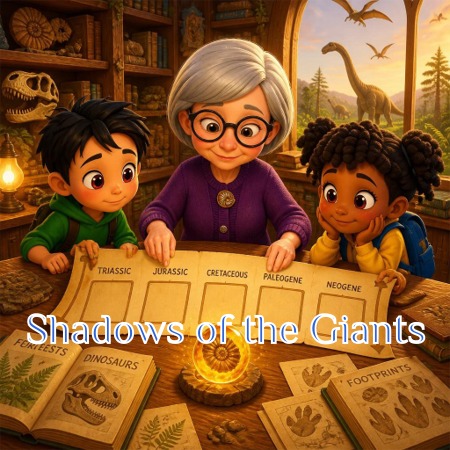
Shadows of the Giants
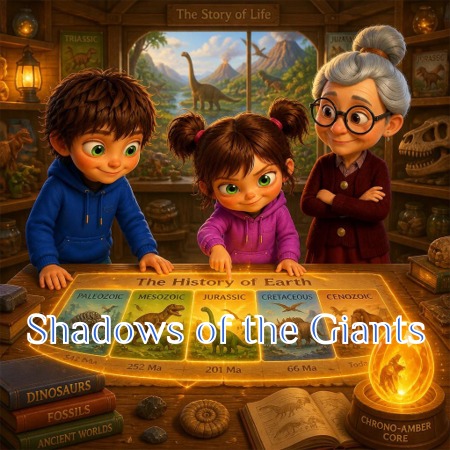
Kai spread the five-slot time-map across a flat stone while Zoe balanced the Chrono-Amber Core in both palms. Their mentor, Mrs. Twitch, had written one warning beside the Jurassic mark: big animals make big problems. Kai grinned, but his voice stayed serious as he said their shared goal was to study sauropods and return safely.
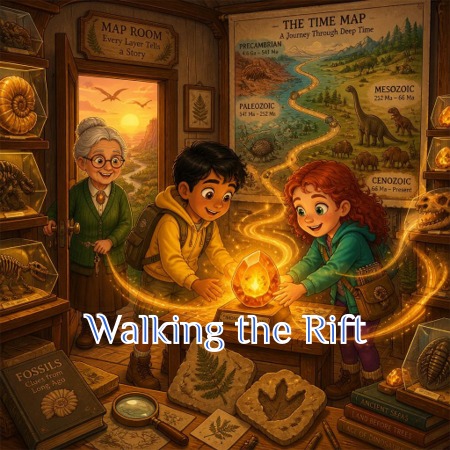
When both children touched the Core, warm amber light liquefied inside it. The glow flowed like honey over their fingers, joined their hands, and pulled them through swirling golden dust. The Core could jump only when they truly agreed, and now its needle spun toward the Middle Jurassic, about 168 million years ago.
They landed in a world so green it seemed painted with every shade of emerald. Conifers towered above fern forests, cycads looked like spiky crowns, and horsetails crowded the damp ground. A faint protective shimmer wrapped around Kai and Zoe, making the humid air safe to breathe, though Zoe remembered it could not stop claws, falling branches, or careless feet.
The ground trembled before they saw the giants. A herd of Cetiosaurus-like sauropods moved between the trees, each adult longer than a school bus and as heavy as several elephants. Their long necks swept forward and sideways to gather leaves without taking many steps, saving energy in a habitat with no grass and no flowering trees.
Near a muddy stream, a smaller shape stood alone, nibbling fern tips and making low, uncertain calls. It was a juvenile sauropod, sympathetic because it was lost, but still a wild animal, not a pet. Kai whispered that they should help by reading the land, not by touching it or trying to ride it.
Zoe opened her sketchbook and drew the youngster’s three-toed back feet and rounder front footprints. Sauropod trackways, she explained, can fossilize when mud hardens, gets buried, and turns to rock over millions of years. The tracks on the bank pointed away from deeper prints made by adults, so the calf had wandered from the herd.
A sudden crack in the forest made both children freeze. Between tree trunks, a Megalosaurus-like hunter sniffed the air, its head low and tail balancing its body like a living seesaw. The shimmer protected Kai and Zoe from bad air, not from being stepped on, so they crouched behind a fallen conifer while the juvenile stood very still.
Beyond the trees lay a sandy nesting ground warmed by sunlight. Sauropods laid eggs in nests or shallow scrapes, and the eggs were much smaller than adult bodies, often about the size of large melons or soccer balls. Adults probably could not sit on them like birds, because a many-ton parent would crush the nest.
Zoe noticed broken eggshell pieces, trampled fern stems, and a wide path leading from the nests toward a lagoon. Herds helped young animals by creating many eyes, many noses, and safer travel routes, even if sauropods did not cuddle babies like mammals. The juvenile smelled the path, gave a low rumble, and began walking faster.