 EN89–12
תצוגה מקדימה של הסיפור
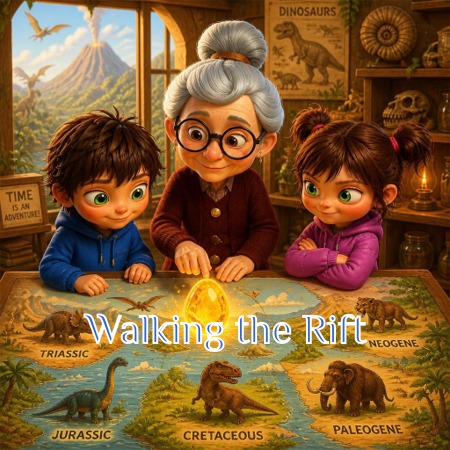
Walking the Rift
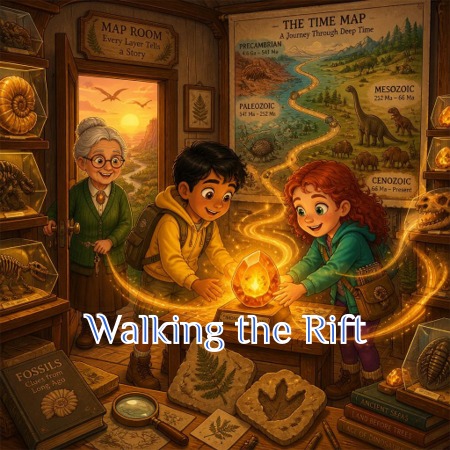
Mrs. Twitch opened the museum skylight, and morning sun flashed inside the Chrono-Amber Core. The ancient amber fossil compass had rested all night, absorbing tiny life signatures from moss, beetles, and the teacher's windowsill fern. Kai and Zoe touched it together and said the same goal: to see life spreading across land. Warm amber light liquefied, flowed like honey over their hands, and pulled them through swirling golden dust.
They landed in a Paleozoic coal swamp about 320 million years ago, where the air felt thick, warm, and green. The Core made a faint protective shimmer around them, helping them breathe in oxygen-rich air that was different from today's. Towering club mosses, horsetails, and seed ferns rose like strange buildings. When these plants died, many sank into wet mud; over millions of years, heat and pressure would turn them into coal.
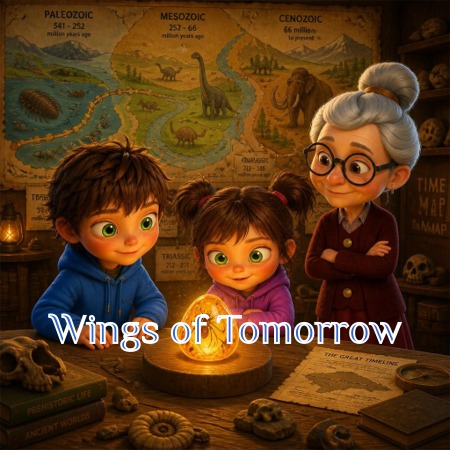
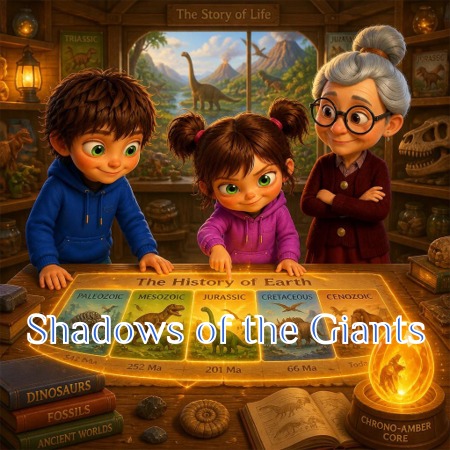
Zoe's time-map unfolded as a glowing ribbon. It showed the continents not as fixed puzzle pieces, but as slow travelers riding on moving plates of Earth's crust. Plate tectonics means these plates creep over softer rock in the mantle, usually only centimeters each year. In the Paleozoic, landmasses were crashing together to form Pangea, one enormous supercontinent. Kai whispered, 'So Earth is a puzzle that takes vacations.'
A shadow zipped over them: Meganeura, a dragonfly-like insect with wings wider than Kai's shoulders. High oxygen helped some insects grow huge, though oxygen alone did not turn everything giant. Near a fallen log, Arthropleura, a many-legged millipede relative, rippled through leaf litter like a moving train. Zoe stepped back politely. The Core shimmer could help with air, but it could not stop a heavy arthropod from accidentally squashing a sneaker.
At a dark pool, amphibians slid between water and land. Many early amphibians still needed water for jelly-like eggs, so they stayed close to swamps and streams. Then the time-map showed a great invention: the amniotic egg. Its shell and membranes held food, water, and protection, like a tiny private pond. Early reptiles and synapsids could lay eggs away from water, opening drier habitats to backboned animals.
The Core dimmed, needing rest before another major jump, so Kai and Zoe waited while it absorbed life signatures from ferns, fungi, and scuttling insects. When it glowed again, they chose the Permian Period. Golden dust spun them forward into Pangea's vast dry interior. Far from oceans, rainfall was lower and seasons were harsher. Coal swamps shrank in many places, while tough seed plants such as conifers spread across dusty plains.
A fin-shaped sail rose behind a red rock. Dimetrodon prowled into view, low, toothy, and definitely not a dinosaur. It was a synapsid, part of the larger animal group that would much later include mammals. Synapsids have a special skull opening behind each eye, giving jaw muscles more room. Dimetrodon's sail may have helped with display or temperature control. Kai tried to look scientific, but mostly looked like a nervous statue.
Dimetrodon huffed and trotted toward a smaller animal near the children. 'Move,' Zoe squeaked, and they scrambled behind a boulder. The Core's tether shimmered warmly over their noses and lungs, but it did not make them invisible, unbiteable, or safe from tumbling rocks. That rule mattered. Earth history was amazing, not a theme park. Dimetrodon veered away after its real prey, leaving Kai to announce, 'I respect non-dinosaurs very much.'