 EN69–12
Story preview
Quiet on Mount Hira
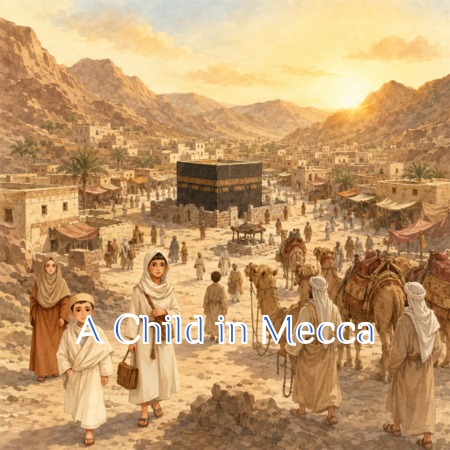
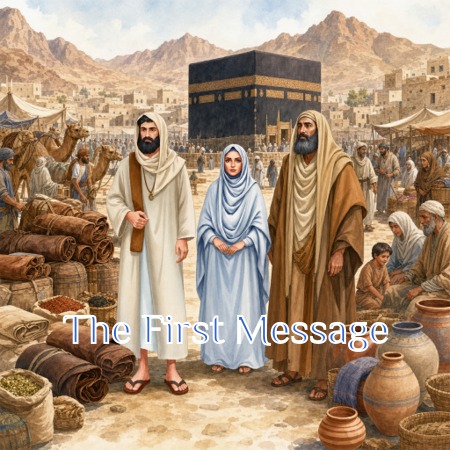
Long before airplanes crossed the Arabian Peninsula, Mecca stood in a dry valley surrounded by rugged brown hills. Around the year 570 CE, Muhammad ibn Abdullah was born into the Quraysh, a tribe connected to trade, pilgrimage, and the care of the Kaaba, a cube-shaped sanctuary respected by many Arab groups.
Muhammad’s early life included both family love and serious loss. His father, Abdullah, died before he was born, and after a few years with his mother, Aminah, he was also cared for by Halimah al-Sa'diyah in the open desert, where children learned hardiness, clear speech, and patience.
When Muhammad was about six, his mother died, and responsibility for him passed to his grandfather, Abd al-Muttalib, a respected elder in Mecca. After Abd al-Muttalib’s death, Muhammad’s uncle Abu Talib became his protector, which mattered greatly in a society where clan support helped keep people safe.
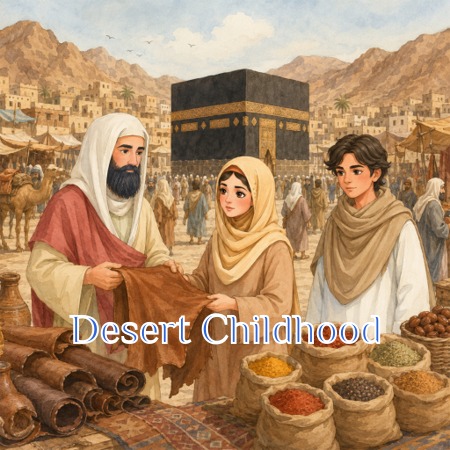
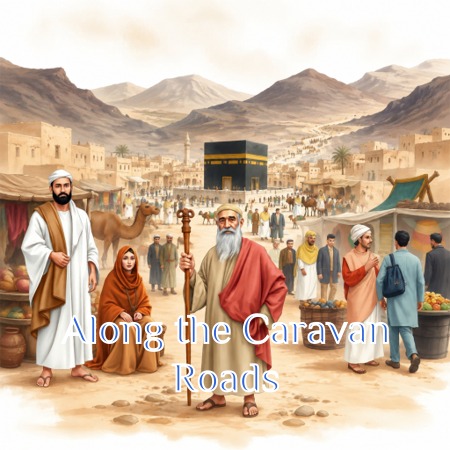
Mecca was not a farming town, because rain was scarce and the land was stony. Instead, many families depended on caravans carrying leather, cloth, spices, and other goods north toward Syria and south toward Yemen, while travelers brought news, languages, and stories from faraway places.
The Kaaba made Mecca an important religious center, and many groups visited during pilgrimage seasons. People honored different deities, made offerings, circled the sanctuary, and followed customs passed down through families, though historians know that exact practices varied and some details are uncertain.
Yet Mecca’s busy streets did not feel the same to everyone. Wealthy merchants could own fine cloth and strong camels, while poorer workers, enslaved people, widows, travelers, and orphans often depended on protection, kindness, or fair dealing from those with more power.
One well-known event from his young adulthood was the Hilf al-Fudul, or League of the Virtuous, an agreement made by several Meccan clans after a visitor was treated unfairly. Later Muslim sources say Muhammad valued this pact, and it shows that questions of justice and responsibility were alive in Meccan life before Islam.
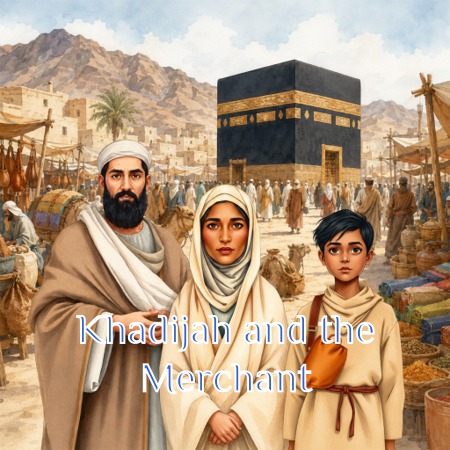
Khadijah bint Khuwaylid, a successful merchant, hired Muhammad to help with her trading business, and reports say his reliability impressed her. Their marriage became an important partnership, and Khadijah is remembered in Islamic tradition as a thoughtful, respected woman who later supported him during a frightening and uncertain turning point.
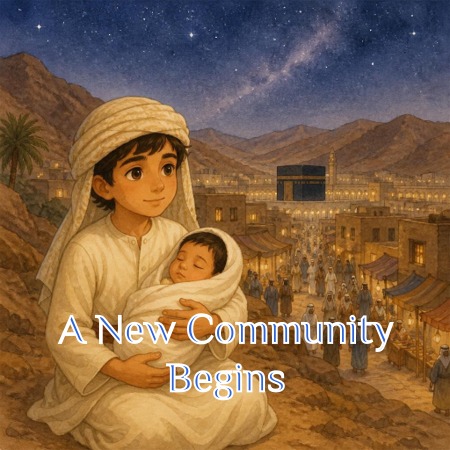
Muslims believe that during one of these retreats, the angel Jibril, or Gabriel, brought the first revelation from God, beginning the message later collected in the Qur'an. After fear and confusion, Muhammad returned to Khadijah, and tradition says she comforted him and consulted Waraqah ibn Nawfal; from this moment, his private reflection slowly became public religious leadership.