 EN79–12
Story preview
Along the Caravan Roads
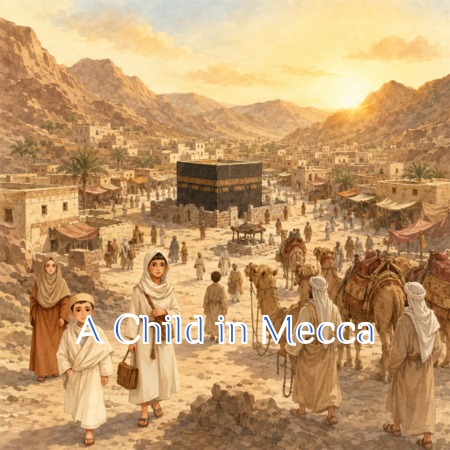
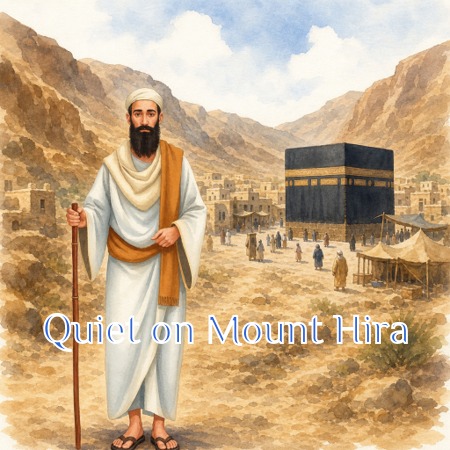
In the sixth century, Mecca was a dry valley town in western Arabia, surrounded by dark hills, pale sand, and rough paths that wound toward distant lands. It did not have broad rivers or green farms, so many families depended on trade, hospitality, and careful knowledge of desert routes.
Muhammad ibn Abdullah was born in Mecca around the year 570 CE, though exact dates from this period are difficult for historians to prove. His mother was Aminah bint Wahb, and his father, Abdullah, had died before Muhammad’s birth, so his earliest story began with both family affection and real hardship.
In Mecca, family groups called clans helped protect their members, settle disagreements, and share responsibilities. Muhammad belonged to the Quraysh, a tribe connected with trade and with the Kaaba, a cuboid sanctuary that drew visitors from many parts of Arabia.
As a small child, Muhammad experienced loss again when Aminah died while he was still young. His grandfather, Abd al-Muttalib, a respected elder, cared for him for a time, and after the grandfather’s death, Muhammad’s uncle Abu Talib became his guardian.
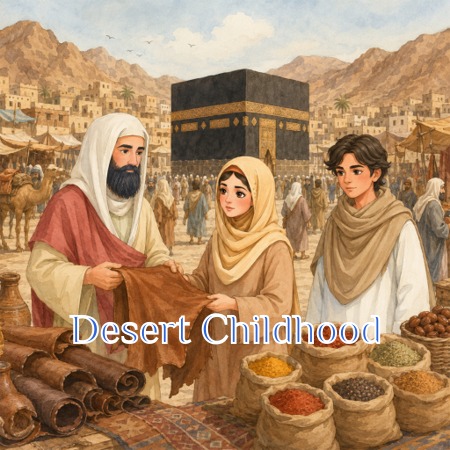
Abu Talib was not wealthy, but he understood the skills needed to survive in a trading society: patience, memory, negotiation, and courage on difficult journeys. In his household, Muhammad grew up learning that trust was not an invisible idea; it was shown by keeping promises, guarding goods, and speaking honestly.
Like many young people in Arabia, Muhammad is traditionally said to have worked as a shepherd. Herding sheep and goats may sound simple, but it taught watchfulness, calm decision-making, and responsibility, because animals needed water, safe grazing, and protection from danger.
Mecca’s merchants moved goods by caravan, using camels that could carry heavy loads across long distances. Caravans traveled north toward Syria, south toward Yemen, and sometimes toward ports and markets connected with East Africa, the Mediterranean world, Persia, and India.
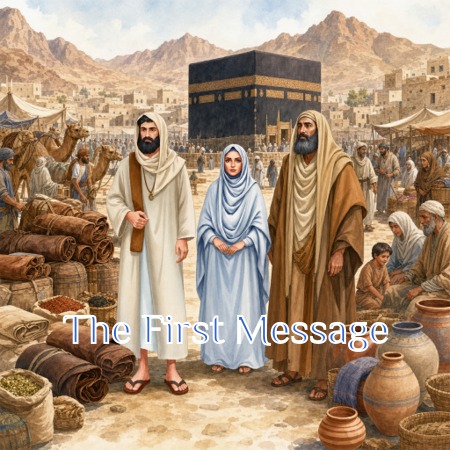
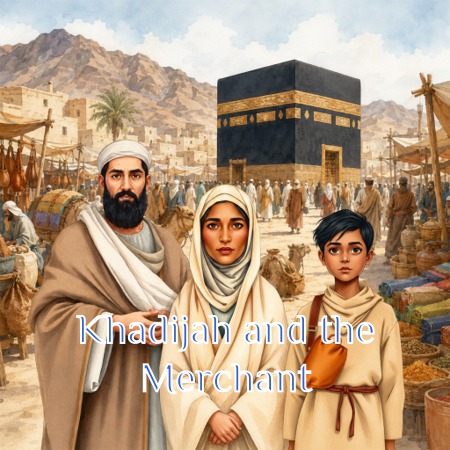
Khadijah bint Khuwaylid, a respected merchant in Mecca, later hired Muhammad to manage trade on her behalf. Reports say that her assistant Maisarah observed his careful conduct during business, and the partnership shows how reputation could open doors in a busy commercial town.