 EN49–12
Story preview
Nature's Incredible Abilities
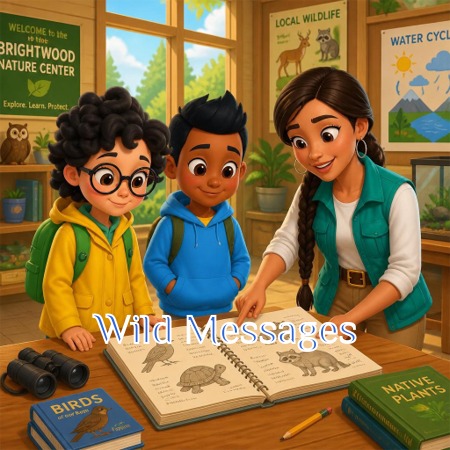
Dr. Maria Santos adjusted her binoculars and smiled at the group of children gathered around her research station. "Today, I'm going to introduce you to some animals with superpowers that would make any superhero jealous!" she announced excitedly.
The first creature she showed them was Rainbow, a mantis shrimp living in a special aquarium. This small ocean animal, no bigger than a smartphone, had one of the most incredible abilities in the animal kingdom. "Rainbow here can punch with the force of a bullet!" Dr. Santos explained.
The mantis shrimp's club-like claws can strike so fast that the water around them actually boils for a split second. This creates a flash of light called sonoluminescence. The strike is so powerful it can break through crab shells and even aquarium glass if it's not thick enough!
Next, Dr. Santos directed everyone's attention to the sky, where Swift the peregrine falcon was circling high above. "Swift is the fastest animal on our entire planet," she said proudly. When hunting, peregrine falcons dive from great heights in a move called a stoop.
During these hunting dives, they can reach speeds of over 240 miles per hour—that's faster than a race car on a highway! Their bodies are perfectly designed for this speed, with special bones in their nostrils that help them breathe during these incredible dives.
Now, let me show you something truly extraordinary," Dr. Santos said, pulling out a microscope. Under the lens was Tiny, a tardigrade, also called a water bear. These microscopic animals, smaller than a grain of sand, are nearly indestructible.
The next superpower belonged to Rosie, a pink axolotl floating gracefully in her tank. Axolotls are a type of salamander from Mexico with an amazing healing ability called regeneration. "If Rosie loses a leg, she can grow it back completely," Dr. Santos explained.
The children were amazed to learn that the natural world contains abilities far more impressive than anything in comic books. Dr. Santos reminded them that thousands of other animals have their own special superpowers too.