 EN46–8
Story preview
The Last Horizon
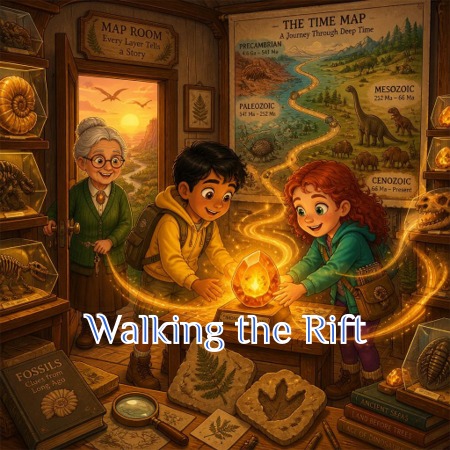
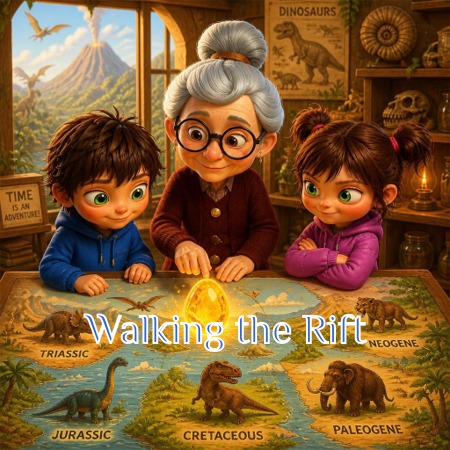
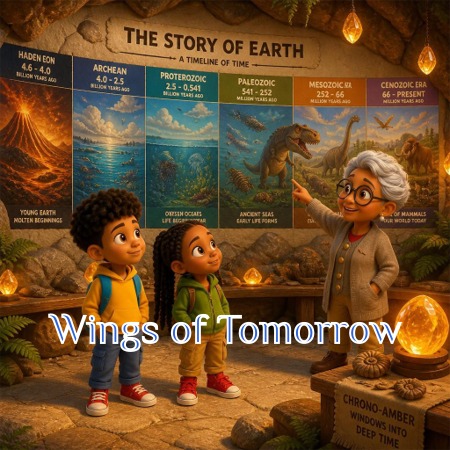
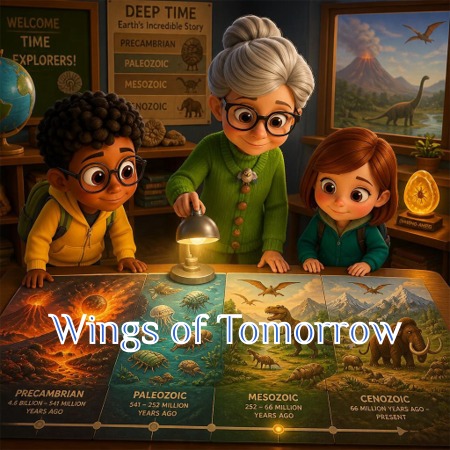
Mrs. Twitch unrolled a glowing time-map across the classroom rug, where oceans, mountains, and ages shimmered like moving paint. Kai leaned so close his bright sneakers touched the edge, while Zoe adjusted her round glasses and spotted a warning mark near sixty-six million years ago. The Chrono-Amber Core, an ancient amber fossil compass, pulsed in Mrs. Twitch’s palm as she explained that their next journey would visit the late Cretaceous, just before a world-changing asteroid.
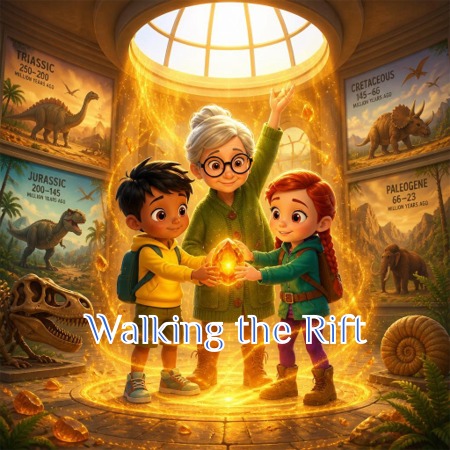
Kai and Zoe placed their hands on the Core together and shared the same goal: learn what Earth was like before the impact. Warm amber light liquefied, flowed like honey over their fingers, and pulled them through swirling golden dust. Mrs. Twitch’s calm voice followed them, reminding them that the Core could wrap them in a faint protective shimmer for air and heat, but it could not stop falling rocks, teeth, or terrible choices.
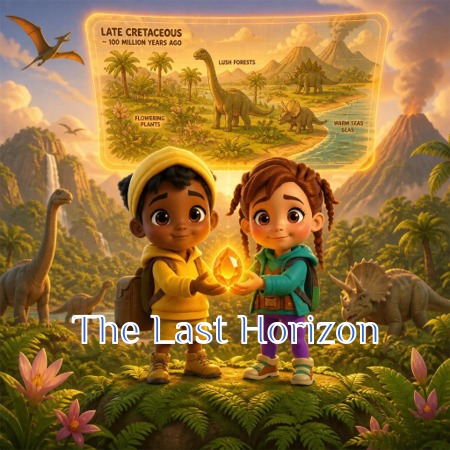
They landed beside a broad river in western North America, where the air smelled warm, green, and muddy. This was the Hell Creek region, long before towns, roads, or humans existed. Instead of a dull doomed world, the late Cretaceous burst with color: flowering plants bloomed in patches of pink and yellow, bees and beetles buzzed over petals, and tall conifers lifted needled branches into the bright sky.
Zoe tapped the time-map, which labeled angiosperms, the scientific name for flowering plants. Angiosperms make flowers and fruits that help them reproduce, often with help from insects carrying pollen. Kai grinned when a beetle landed on his sleeve, then squeaked when it tried to explore his notebook. He wrote that flowers were changing ecosystems by feeding insects, small animals, and plant-eating dinosaurs in new ways.
Across the floodplain, Crown the Triceratops cropped tough plants with a strong beak while others in the herd shuffled nearby. A Triceratops was a horned dinosaur, and its frill and three horns may have helped with defense, display, and recognizing its own kind. Kai noticed broken branches, trampled ferns, and piles of dung. Zoe explained that herbivores shaped habitats, spreading seeds, opening pathways, and becoming food for predators.
A deep thud rolled through the ground, and even the insects seemed to pause. Ridge the Tyrannosaurus rex stepped from the trees, taller than a school bus and built for power, with huge jaws and banana-sized teeth. The children froze behind a fallen log. Zoe whispered that T. rex was both predator and scavenger, using strong senses, heavy legs, and bone-crushing bites to rule this ecosystem’s food web.
The Core’s protective shimmer glittered around them, but it did not make them invisible or bite-proof. Kai and Zoe stayed still as Ridge sniffed the air and turned toward the Triceratops herd instead. Crown lowered his horns, the herd bunched together, and Ridge chose not to attack. Kai quietly marked the lesson: predators do not fight every moment; survival often means saving energy and choosing carefully.
Days seemed to fold strangely as the Core showed a time-map summary instead of making them endure every hour. Dust and soot spread through the sky, blocking sunlight like a dirty curtain. With less sunlight, plants struggled to grow; with fewer plants, herbivores went hungry; with fewer herbivores, predators lost food too. Zoe called it food-chain disruption, when damage at one level affects many living things connected by eating and energy.