 EN129–12
תצוגה מקדימה של הסיפור
A New Community Begins
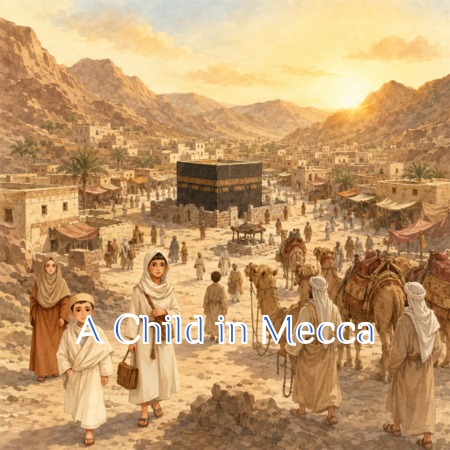
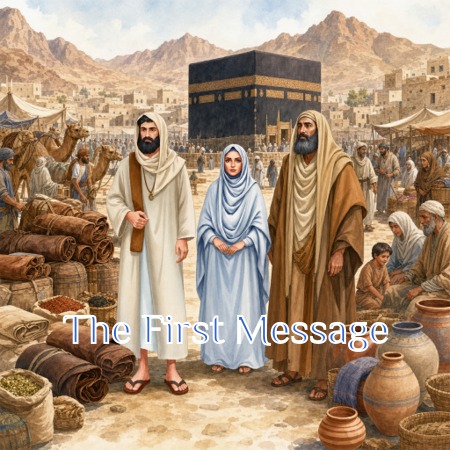
In western Arabia, among dry mountains and starlit desert roads, stood Mecca, a busy town known for trade and pilgrimage. Muhammad ibn Abdullah was born there around the year 570 CE into the Quraysh, a group of clans who cared for the Kaaba, an ancient sanctuary honored by many Arabs.
Muhammad lost his parents when he was young, so relatives helped raise him in a society where family protection mattered greatly. As he grew, people came to respect his honesty in trade, and later Muslim tradition remembers him as al-Amin, meaning the trustworthy one.
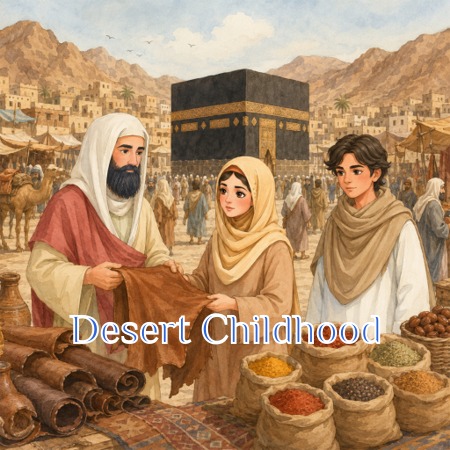
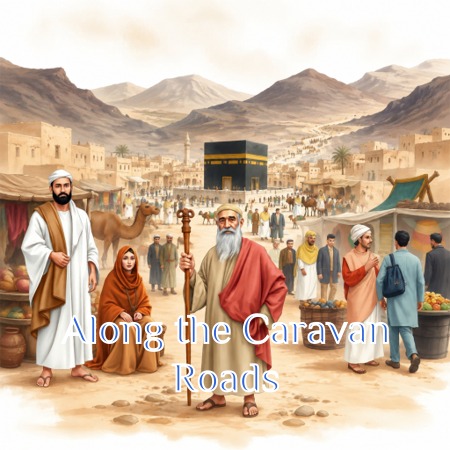
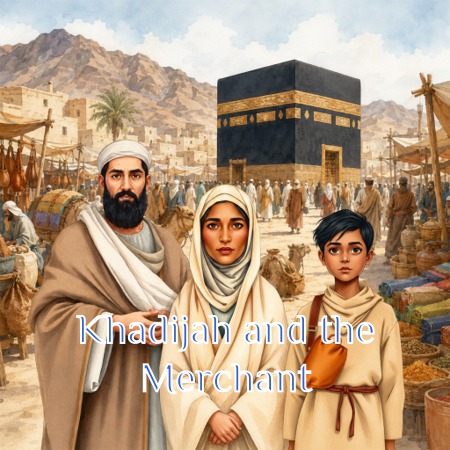
Khadija bint Khuwaylid was a successful merchant whose caravans carried goods such as leather, cloth, and spices across long routes. Muhammad worked for her, and their marriage joined two thoughtful people; sources describe Khadija as confident, wise, and deeply supportive.
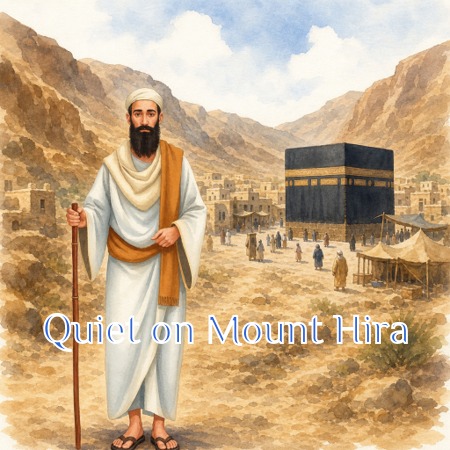
Muhammad sometimes spent time thinking in a cave on Mount Hira, away from the noise of the marketplace. Muslims believe that, when he was about forty, the angel Gabriel brought him the first revelation from God, beginning the words later collected in the Qur'an.
At first, the new message moved through private conversations rather than public speeches. Khadija, young Ali ibn Abi Talib, Zayd ibn Harithah, and Abu Bakr were among the earliest people described in Islamic sources as accepting Muhammad's teaching.
Abu Bakr, a respected merchant, spoke with trusted friends, and the circle of followers slowly expanded. Bilal ibn Rabah, an Abyssinian man living in Mecca, became one of the early Muslims and is remembered for his strong faith and later for his beautiful call to prayer.
After a few years, Muhammad's message was presented more openly in Mecca, including near the Kaaba and in gatherings where clans could hear important news. Illustrations of this period can show an empty speaking place, listening crowds from a distance, and sunlight falling across stone streets, without depicting Muhammad directly.
As tensions in Mecca increased, many followers left quietly for Yathrib, and Islamic tradition says Muhammad and Abu Bakr also made the dangerous journey, remembered as the Hijra. In Yathrib, soon called Medina, Muhammad became the recognized religious leader of a growing community, and the story moved from quiet conversations to organized communal life.