 EN59–12
Vista previa de la historia
The Last Horizon
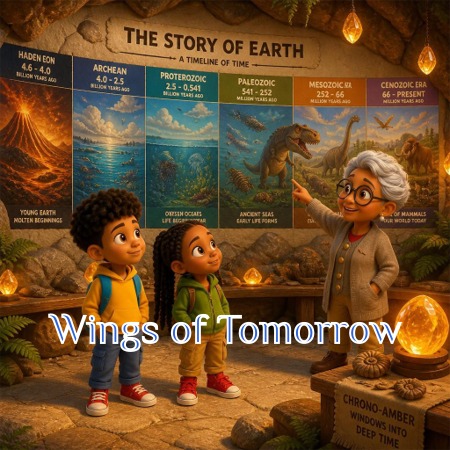
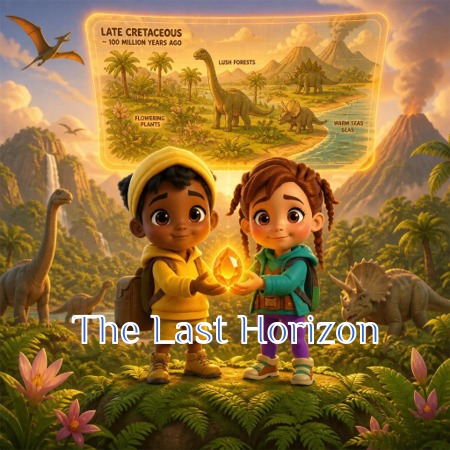
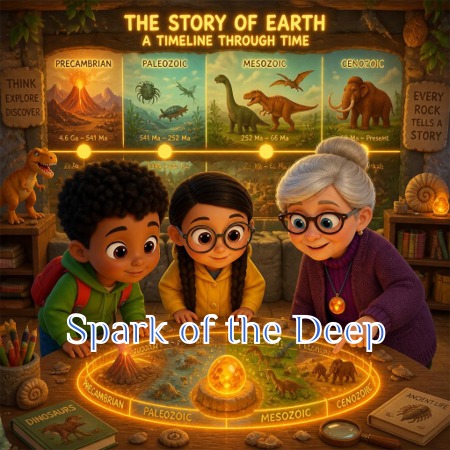
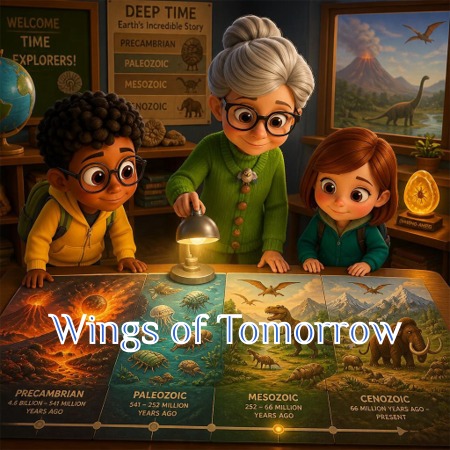
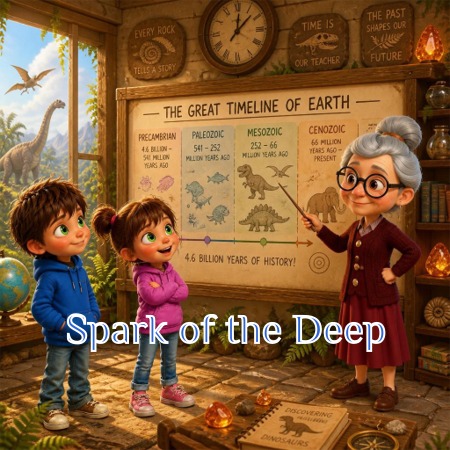
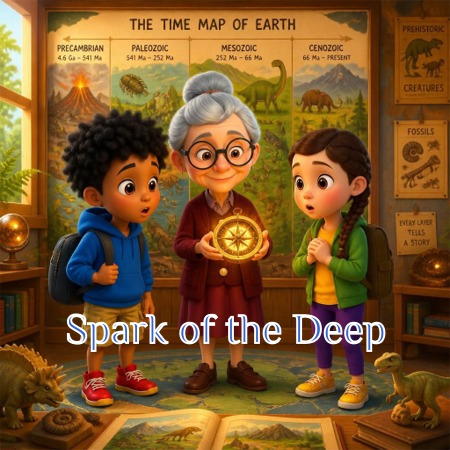
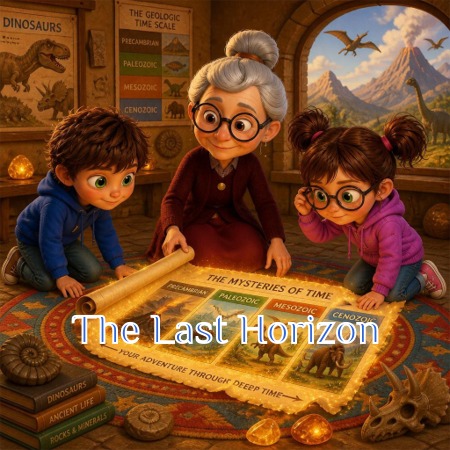
For their fourth time-map mission, Kai and Zoe stood in Mrs. Twitch's museum room beside a wall timeline stretching from fiery young Earth to modern birds. Their mentor polished the Chrono-Amber Core, a glowing ancient amber fossil compass with a beetle trapped inside. She reminded them that the Core worked only when both children touched it and shared the same goal, because science needed teamwork as much as curiosity. Kai said their goal was to visit the last world of the non-bird dinosaurs, and Zoe added that they must observe without changing history. Warm amber light liquefied inside the Core, flowed like honey over their hands, and pulled them through swirling golden dust. A faint protective shimmer wrapped around them; it could help them breathe strange air, Mrs. Twitch had said, but it could not stop falling rocks, claws, or bad choices.
They landed in western North America, 66 million years ago, in the Late Cretaceous Period. Kai expected a dull swamp, but the land burst with color: pink magnolia-like blossoms, white water lilies, green ferns, and buzzing insects. Flowering plants, called angiosperms, had spread across many habitats, offering nectar and fruit while insects carried pollen from bloom to bloom.
A heavy shape moved between the shrubs, and Zoe's notebook almost fell open by itself. Cloverhorn, a Triceratops, cropped plants with a beak like a giant parrot's, then ground the leaves with cheek teeth. Horned dinosaurs were herbivores, or plant eaters, and their frills and horns may have helped with defense, display, and recognizing members of their own kind.
The ground trembled, not like an earthquake, but like footsteps with confidence. Ridgeback the Tyrannosaurus rex appeared on a ridge, balancing a huge skull with a strong tail and sniffing the breeze. T. rex was a predator and scavenger, with bone-crushing jaws and sharp senses, yet it was not a movie monster; it was an animal finding food in a complicated ecosystem. Kai and Zoe ducked behind a fallen log, because the shimmer did not make them invisible or bite-proof. Ridgeback turned toward a distant smell and lumbered away, leaving three-toed footprints in damp sand. Zoe sketched the tracks and labeled them trace fossils, evidence of behavior, while Kai measured one with his boot and decided his shoe looked very un-dinosaury.
At twilight, smaller lives came out. Pip, a furry early mammal no bigger than Zoe's hand, nosed under leaves for beetles and seeds. Many Cretaceous mammals were warm-blooded, active at night, and good at hiding, which helped them live alongside dinosaurs. They were not yet rulers of the land, but they were adaptable, a word meaning able to change habits when the world changes.
The Chrono-Amber Core projected a glowing time-map above the ferns. Warning lines streaked across the model sky toward a spot near today's Yucatan Peninsula in Mexico. Zoe swallowed hard as Mrs. Twitch's lessons returned: a colossal asteroid, about ten kilometers wide, was racing toward Earth. Scientists call the crater it made Chicxulub, and rocks around the world still hold clues to that moment.
Before the warning arrived, life continued busily, which surprised Kai most of all. Dinosaurs nested, insects pollinated flowers, fish flashed in rivers, and small mammals threaded through roots. The Late Cretaceous was not a dying world waiting sadly for disaster; it was alive, changing, and full of connections. Ecosystem means all the living things in a place, plus the water, air, soil, and sunlight they depend on.
Then the horizon flared brighter than sunrise. Far away, the asteroid struck with energy beyond any storm, blasting rock, dust, and vapor high into the atmosphere. The ground rolled under Kai and Zoe, and hot pebbles began to hiss down like angry hail. The Core's shimmer helped with choking air, but not impacts, so the children scrambled into a rocky hollow and covered their helmets with packs. Golden daylight turned copper, then gray. Dust, soot, and tiny sulfur droplets spread around the planet, blocking much of the sunlight. Without enough light, many plants and ocean plankton could not photosynthesize, meaning they could not use sunlight to make food. When plant growth slowed, plant eaters struggled, and then predators struggled too, because food chains link eaters to the eaten.
The danger was real, but the story was not hopeless. Extinction means a kind of living thing disappears forever, and after this event about three-quarters of species vanished, including all non-bird dinosaurs. But some lineages survived: birds, which are living dinosaurs, small mammals, crocodile relatives, turtles, frogs, insects, seeds, spores, and tough plants waiting for better light. In the hollow, Pip and two tiny mammals shivered near a crack in the stone. Zoe held her jacket beside them as a windbreak for one minute, while Kai checked the Core's time-map for ripples. The map glowed steady green: the animals had always found this shelter, and the children had not changed history. Pip blinked, then vanished into the natural tunnel with a flick of whiskers. Ash softened the world into quiet shapes. The Chrono-Amber Core dimmed, needing rest before any major jump, and began absorbing faint ambient life signatures from hidden roots, spores, insects, and breathing survivors. Kai and Zoe sat together, amazed that survival could begin so small. When the Core finally sparked, it showed only a blurry future of forests, feathers, and mammals, asking where their next era would lead.