 EN126–8
Story preview
The Night Recharge
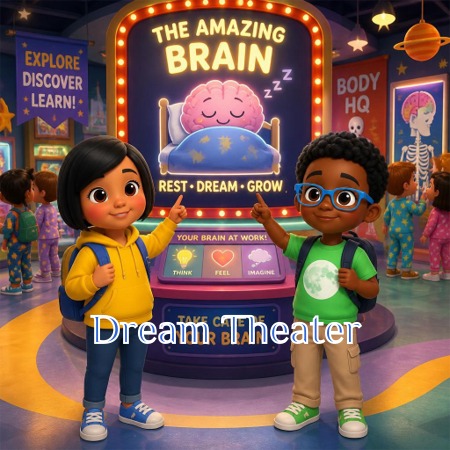
Maya yawned so wide that Ollie pretended he could park a toy bus in her mouth. They were visiting the Sleep Lab corner of the science museum, where Dr. Amina Patel smiled beside a bed covered in colorful wires, soft pillows, and a sign shaped like a crescent moon.
Sleep may look like doing nothing, but Dr. Amina explained that it is more like a busy overnight workshop. While your eyes are closed, your body repairs tiny worn-out parts, your brain sorts the day, and your energy tank fills up again for running, thinking, laughing, and learning.
Inside your body is a gentle body clock called the circadian rhythm. Circadian means about a day, and this clock notices light and dark, meal times, and routines. When evening comes, your brain can release melatonin, a sleepy-time messenger that tells your body, The sun is going down, let us get ready to rest.
Ollie touched a big model of a person sleeping under a blanket. Dr. Amina pointed to the heart, lungs, bones, and muscles. During sleep, breathing and heartbeat become steadier, muscles relax, and the body can mend little scratches, build strong bones, and release growth hormone, which helps children grow.
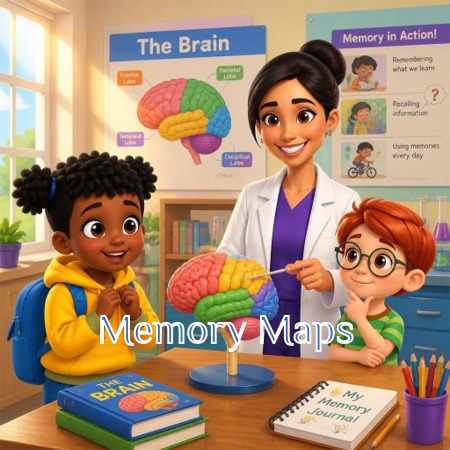
Maya asked, Does my brain sleep too? Dr. Amina laughed kindly and said the brain stays active, but in a different way. It tidies memories like a librarian putting books on shelves, moving important learning from a short-time pocket into longer storage so tomorrow you can remember spelling words, dance steps, or how to tie a knot.
On the wall hung a portrait of Dr. Nathaniel Kleitman, a scientist who helped people understand sleep by carefully studying sleeping brains. Dr. Amina showed a chart with repeating hills called sleep cycles. In each cycle, you move through light sleep, deep sleep, and REM sleep, and many cycles happen in one night.
Sleep also helps feelings settle down. Dr. Amina compared emotions to glitter in a jar of water after it has been shaken. A calm night of sleep gives the glitter time to drift downward, so worries, grumpiness, and big feelings may feel easier to understand in the morning.
At home that night, Maya and Ollie built a calm routine like a little train with four cozy carriages. First came pajamas, then teeth brushing, then a story, then three slow breaths. Routines help because the brain loves clues, and the same gentle steps can say, We are safe, and sleep is coming.
By morning, Maya woke with a stretchy smile, and Ollie drew a picture of his dream about a moon-shaped pancake. They remembered the key ideas: sleep resets the body, grows and repairs, sorts memories, calms emotions, supports immunity, and refills energy. With dark nights, bright mornings, and kind routines, sleep becomes a helpful friend.