 EN126–8
Leseprobe
Dream Theater
Maya and Theo arrived at the children’s science museum for the Night Brain Club, wearing pajamas over their clothes. A glowing sign showed a cartoon brain tucked into bed, and Maya whispered, “Tonight we solve a mystery: why do we dream?”
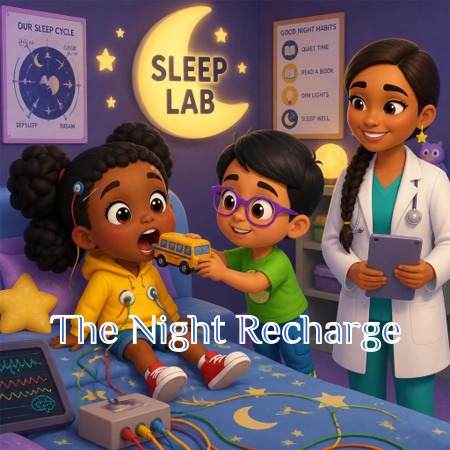
Dr. Nia Patel, a sleep scientist, welcomed them beside a model bedroom with a cozy blanket and a pretend moon in the window. “Dreams are stories, pictures, feelings, and ideas that can happen while you sleep,” she said. “They can be silly, beautiful, confusing, or surprisingly ordinary.”
Theo asked, “Is my brain switched off when I sleep?” Dr. Nia shook her head and pointed to a colorful brain diagram. “Your body rests, but your brain stays busy doing important jobs, a little like a library sorting books after closing time.”
She showed them a soft cap covered with tiny sensors. “Scientists use tools like EEG, which means electroencephalogram, to notice gentle patterns of brain activity,” Dr. Nia explained. “The sensors do not read thoughts; they only help measure the brain’s electrical signals, like seeing waves on the sea.”
On a wall chart, sleep looked like a staircase with stages. Dr. Nia explained that non-REM sleep often helps the body rest and grow, while REM sleep is a stage when the eyes move quickly under closed eyelids. “Many vivid dreams happen in REM, but dreams can visit in other stages too.”
Maya imagined tiny librarians in her head carrying picture books. Dr. Nia smiled and said, “One idea is that dreams help sort memories.” Memories are things you have learned or experienced, and during sleep the brain may connect new memories with old ones, like adding fresh stickers to a scrapbook.
They stopped at a museum portrait of Dr. Rosalind Cartwright, a psychologist who studied dreams and feelings. Dr. Nia explained, “She helped scientists think about how dreams may connect with emotions.” Emotions are feelings, such as joy, worry, surprise, or pride, and dreams can be a practice space for them.
Maya asked, “So if I dream I am lost, is my brain practicing?” “Possibly,” said Dr. Nia. “Some scientists think dreams let us explore feelings in a safe, pretend way, like rehearsing a play without a real stage or audience.”
Theo looked serious. “Sometimes I have nightmares.” Dr. Nia’s voice stayed gentle. “Nightmares can feel scary, but they are not real, and many children and adults have them. After an upsetting dream, it can help to talk to a trusted adult, have a hug, or draw a new, calmer ending.”
Maya wanted to test dream science at home. Dr. Nia gave them a safe experiment: keep a dream notebook by the bed, and in the morning write or draw anything remembered. “Do not worry if you remember nothing,” she said. “Dream memories can fade quickly, like soap bubbles popping in sunlight.”